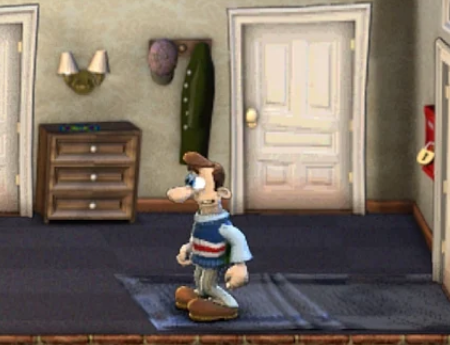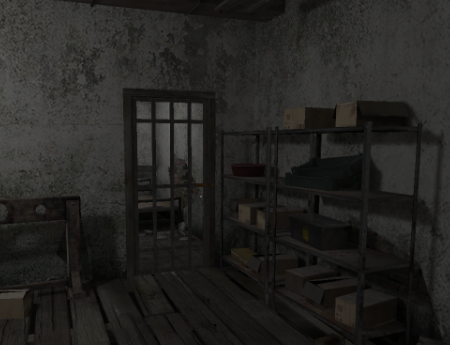
Happy Game is a point-and-click horror adventure about a young boy trapped inside a series of nightmares. There is a clear story, but it is told mostly through images, animation, sounds, and events rather than dialogue. The boy falls asleep and enters worlds filled with smiling creatures, toys, animals, and distorted versions of things that would normally seem harmless. His goal is to survive these nightmares, recover things connected to his happiness, and eventually wake up.
Three Connected Nightmares
The game is divided into three main nightmare sections that function like large levels. Each nightmare has its own environments, creatures, puzzles, and visual ideas, but they are connected through the boy’s story. The first introduces the basic interactions and strange smiling figures. Later sections become more dangerous and include different locations, hostile creatures, and more complicated sequences. Instead of freely exploring a large map, the player moves through a mostly linear chain of scenes and solves each situation before continuing.
Puzzles Inside a Dangerous Dream
Gameplay is controlled mainly by clicking and dragging objects on the screen. There is no inventory system filled with collected tools and no traditional combat. Most puzzles require the player to observe what is happening, interact with objects in the correct order, and experiment with unusual reactions. During the game, players will:
· move objects by clicking and dragging them;
· activate mechanisms and environmental elements;
· interact with creatures and characters;
· solve visual and logic-based puzzles;
· complete timed sequences before the boy is killed;
· search scenes for the next interactive element;
· progress through all three nightmares.
Some puzzles are based on trial and error. Pulling, spinning, opening, hitting, or moving something can produce unexpected results, and the player often needs to discover the solution by testing different interactions.
The game also contains dangerous situations where creatures can attack the boy. These sequences require faster reactions than the regular puzzles, but Happy Game does not become an action game. Failure usually returns the player to a nearby point, allowing the scene to be attempted again. There are also disturbing transformations, violent scenes, smiling faces, rabbits, strange heads, and other recurring elements that change as the nightmares progress.
Reaching the End of the Dream
Progress is completely tied to solving the current scene and moving into the next part of the nightmare. There are no character levels, equipment upgrades, open-world areas, or optional combat systems. The main objective is to guide the boy through every puzzle and dangerous encounter until all three nightmares are completed. Happy Game focuses on visual storytelling, environmental interaction, puzzle solving, and discovering what each strange dream scene requires from the player.